Explainer
What is AEO? Answer engine optimization explained
What is AEO? Answer engine optimization is the work of getting quoted inside an AI answer, instead of only listed below it. This post defines the term, compares AEO with SEO and GEO, and ranks the fixes that have evidence behind them.

Key takeaways
- Adding sources, quotes, and statistics gave a 30 to 40% lift in the one controlled experiment.[1]
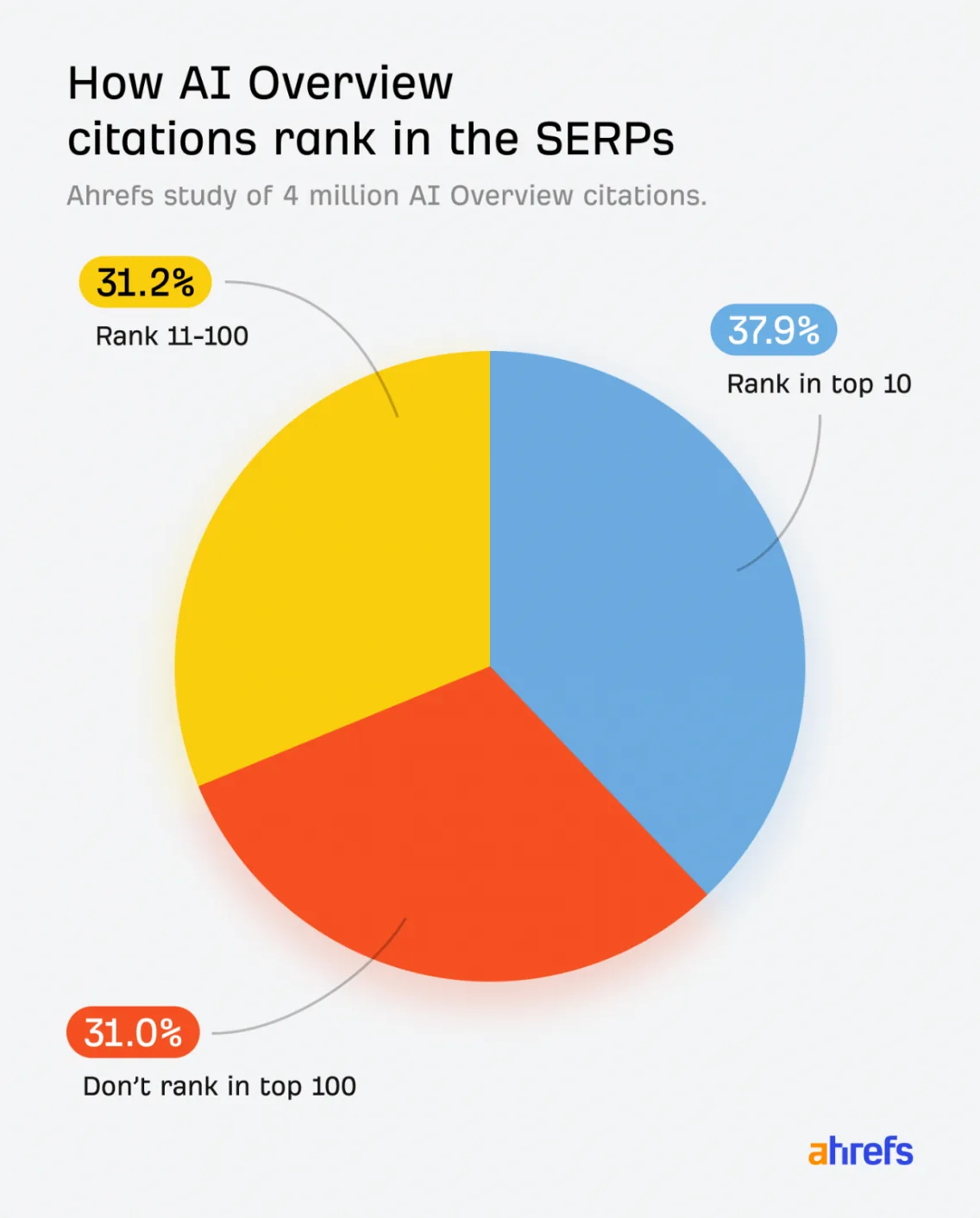
- Only 38% of AI Overview citations now come from the organic top ten, so ranking first no longer guarantees a quote.[3]
- The widely repeated “FAQ schema gives 44% more citations” claim has no traceable source, and the nearest controlled test found no lift.[6][4]
In this article
What is AEO?#
AEO is short for answer engine optimization. It is the work of making a page more likely to get quoted when an engine writes an answer, instead of only linking to it. Success is not a position. It is whether a sentence from your page ends up inside the answer, with your name on it.
What is the difference between AEO, SEO and GEO?#
Mostly a difference in where each term came from. Generative engine optimization (GEO) is the term used in research papers.[1] AEO is older, from the featured snippet and voice answer era, before language models existed. LLM optimization (LLMO) is the newest label. Today all three are sold as one job: getting quoted by a system that retrieves pages and writes an answer from them. That overlap is a market fact, not a research finding. SEO is the older job of earning a place in a list of links. The table compares them.
| SEO | AEO | GEO | |
|---|---|---|---|
| Stands for | Search engine optimization | Answer engine optimization | Generative engine optimization |
| What you win | A position in a list of links | A quoted passage inside an answer | A quoted passage inside a generated answer |
| Where the term comes from | Classic web search | Featured snippet and voice answer era | Research papers, such as Aggarwal et al.[1] |
| How you check it | Rank for a keyword | Is your page quoted for the question? | Is your page quoted, across runs and engines? |
| Does it need the others? | Gets you indexed, the entry ticket | Overlaps with SEO, but only 38% of AI Overview citations come from the top ten[3] | Same job as AEO under another name |
If you want the research detail behind all three names, read our guide to LLM SEO. If you would rather hand the work to an outside team, read what is an SEO agency.
How does an engine decide what to quote?#
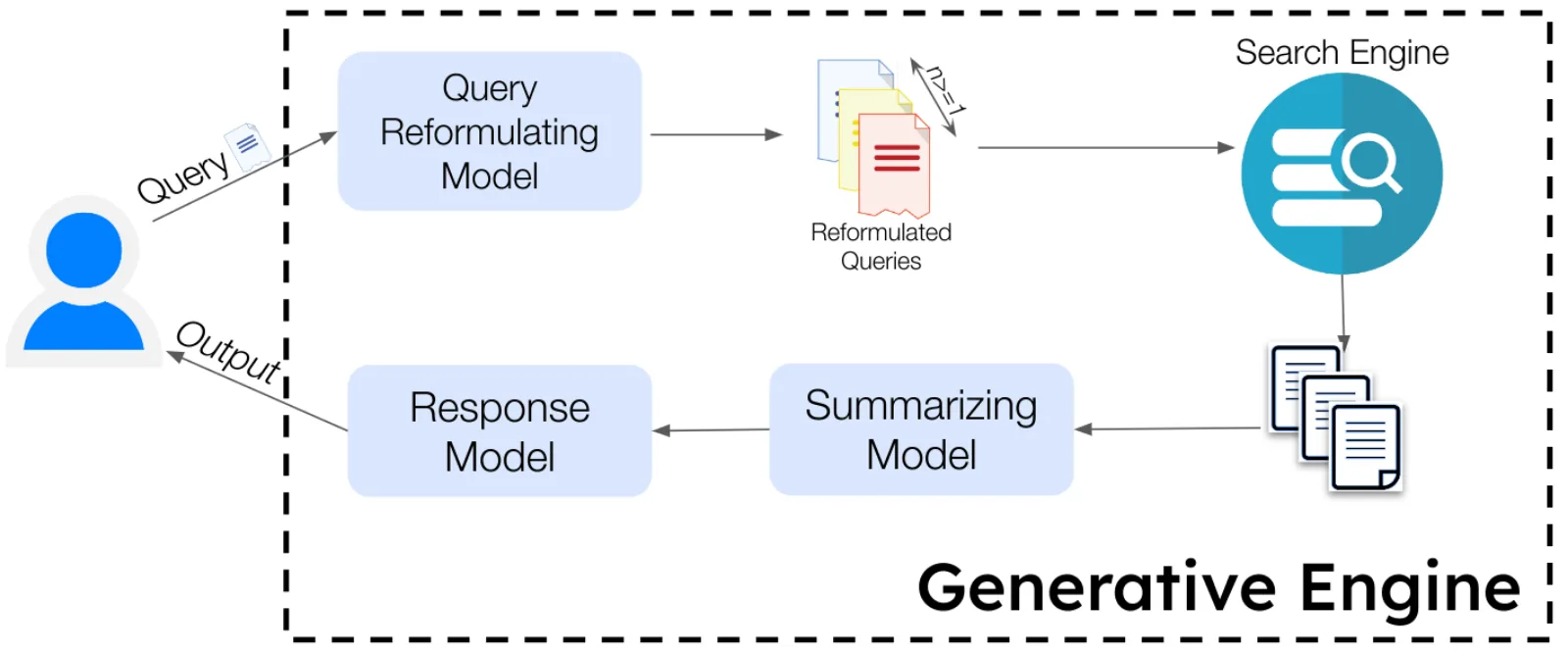
Some engines run their own index, like Google and Brave. Others send a rewritten version of your question to an index they do not own. Either way, the engine pulls a set of candidate pages, then writes an answer from the passages it pulled. A page missing from the index cannot be quoted, however good it is. And an engine quotes a passage, not a whole page, so a paragraph that stands alone is easier to lift than an argument that only works read in full. Ranking and citation have split apart: Ahrefs found only 38% of Google AI Overview citations now come from the organic top ten, down from about 76% in July 2025.[3]
Which AEO fixes have evidence?#
One controlled experiment tested nine methods for getting quoted, across many topics.[1] The top three, adding sources, quotes, and statistics, gave a 30 to 40% lift on the paper's visibility metric. Keyword stuffing, an old SEO habit, did not work. A separate, observational study looked at 1,100 pages and 1,702 citations across three live engines. Citation correlated with an overall quality score at an odds ratio of 4.2, strongest for metadata, freshness, and structured data.[2] It cannot show those signals cause citation, only that they travel together.
| Claim | Evidence | Type |
|---|---|---|
| Add sources, quotes, statistics | 30 to 40% lift on one visibility metric[1] | Controlled experiment |
| Keyword stuffing | Little to no improvement[1] | Controlled experiment |
| Higher overall page quality | Odds ratio 4.2 for being cited[2] | Observational, not causal |
| Add schema markup | No lift on two engines, about 4.6% drop on Google AI Overviews[4] | Matched comparison |
Which popular claims have no evidence?#
“FAQ schema gives you 44% more citations.”
This number is repeated everywhere and usually credited to BrightEdge. An independent review traced it and found no such study; BrightEdge did publish a 44% figure, but about AI Overviews being 44% more likely to criticise a brand than ChatGPT.[6] The closest controlled test, 1,885 pages that added schema against about 4,000 matched pages that did not, found no lift on ChatGPT or AI Mode, and a drop of about 4.6% on Google AI Overviews.[4]
“We raised your AI visibility by X%.”
Without a control group and repeated runs, this cannot be checked. The sources an engine cites overlap by only 34 to 42% between two days in a row.[5] That alone can produce a swing that looks like progress.
For which engine reads which index, see how AI search engines work.
Noetio checks where you get quoted across ChatGPT, Perplexity, Gemini, and Google's AI Overviews, then adds the sources, quotes, and structure the evidence above supports. See our AI SEO services, or run the free check today.
FAQ
- What is AEO?
- AEO stands for answer engine optimization. It is the work of making a page more likely to be quoted when an engine writes an answer, instead of only linking to it. Success is not a position. It is whether a sentence from your page ends up inside the answer, with your name on it.
- What is AEO vs SEO?
- SEO earns a position in a list of links, and the click follows. AEO earns a quoted passage inside a written answer. They overlap: on Google, a page must be indexed and eligible for a snippet to be linked in AI Overviews. But Ahrefs found only 38% of AI Overview citations come from the organic top ten, so a good SEO rank does not guarantee a quote.
- What is AEO in AI?
- In AI search, AEO means preparing your content so ChatGPT, Perplexity, Gemini and Google AI Overviews can find it, read it and quote it. The engine pulls candidate pages, then writes an answer from the passages it pulled. A page missing from the engine's index cannot be quoted.
- Is AEO the same as GEO?
- Mostly. GEO (generative engine optimization) is the term from research papers. AEO is older, from the featured snippet and voice answer era. Both are sold today as one job: getting quoted by a system that retrieves pages and writes an answer from them.
- Does FAQ schema improve AEO?
- The evidence says no. The popular claim that FAQ schema gives 44% more citations has no traceable source. The closest controlled test, 1,885 pages that added schema against about 4,000 that did not, found no lift on ChatGPT or Google AI Mode and a drop of about 4.6% on Google AI Overviews.
Want the evidence ranked fix list for your site?
Sources
- Aggarwal et al., “GEO: Generative Engine Optimization” arXiv:2311.09735, KDD 2024. 10,000 queries drawn from 25 domains.
- GEO-16 framework arXiv:2509.10762. 70 prompts, 1,702 citations, 1,100 URLs, three production engines.
- Ahrefs, “38% of AI Overview Citations Pull From The Top 10” 863K keyword SERPs, 4M AI Overview URLs, March 2026. Vendor study.
- Ahrefs schema study matched difference in differences, 1,885 treated pages vs about 4,000 controls, August 2025 to March 2026. Vendor study.
- “Don't Measure Once” arXiv:2604.07585, on run to run variance in AI answer sources.
- Cheung, “Should You Bother With Schema Markup for AI Search?” Independent review of ten direct sources on schema and AI citation, ordered by methodological control. Traces the BrightEdge 44% figure to an actual statistic about a different subject.
Three of these are papers with disclosed method, two are vendor studies, and one is an independent evidence review. Where a widely repeated figure has no source, that is stated rather than omitted.
If you want this done for you