Explainer
SEO automation: what can (and can't) be automated for AI search
SEO automation works for part of the job, including GEO (getting named in AI answers). Today's tools can already write a page with sources and statistics on their own, but every serious vendor still puts a person between the draft and the live site, and nobody automates getting your brand mentioned in the forums AI engines trust most.

Key takeaways
- Tools can already write pages with sources, quotes, and numbers on their own, and pages built that way scored 30 to 40% higher in one study.[1]
- Every major vendor still keeps a person between the draft and the live page. Profound says every run it makes needs approval before anything publishes.[2]
- Nobody automates the part that carries the most weight: getting your brand mentioned on sites like Reddit, which supplies close to half of Perplexity's sources.[4]
In this article
SEO automation today: what can be automated, and what cannot?#
Not the whole job, no. Tools can already find the questions your buyers ask and where you are missing from the answer. They can also draft a page in minutes. What no tool does yet is publish that page without a person checking it first, or get your brand named in the forums and comparison sites AI engines already trust.
| Task | Can it be automated? | Why |
|---|---|---|
| Find the questions buyers ask and where you are missing | Yes | Tools already do this |
| Draft a page with sources, quotes and statistics | Yes | Pages built this way scored 30 to 40% higher in one study of 10,000 buyer questions |
| Publish the page | Not without a person | Profound says every agent run has an approval step; Google's March 2026 update cut traffic 50 to 80% on sites with low quality AI pages |
| Get mentioned on Reddit and forums | No | Reddit is Perplexity's largest single source (estimates run from a quarter to close to half), and Reddit banned researchers' undisclosed AI accounts |
What already automates well?#
Writing the page is the easy part now. A tool can add sources, quotes, and statistics to a draft on its own. That matters because a study of 10,000 buyer questions found that pages with sources, quotes, and statistics scored 30 to 40% higher on the study's main visibility measure than plain pages.[1] The same study found that stuffing a page with keywords did not help.
Why does publishing still need a person?#
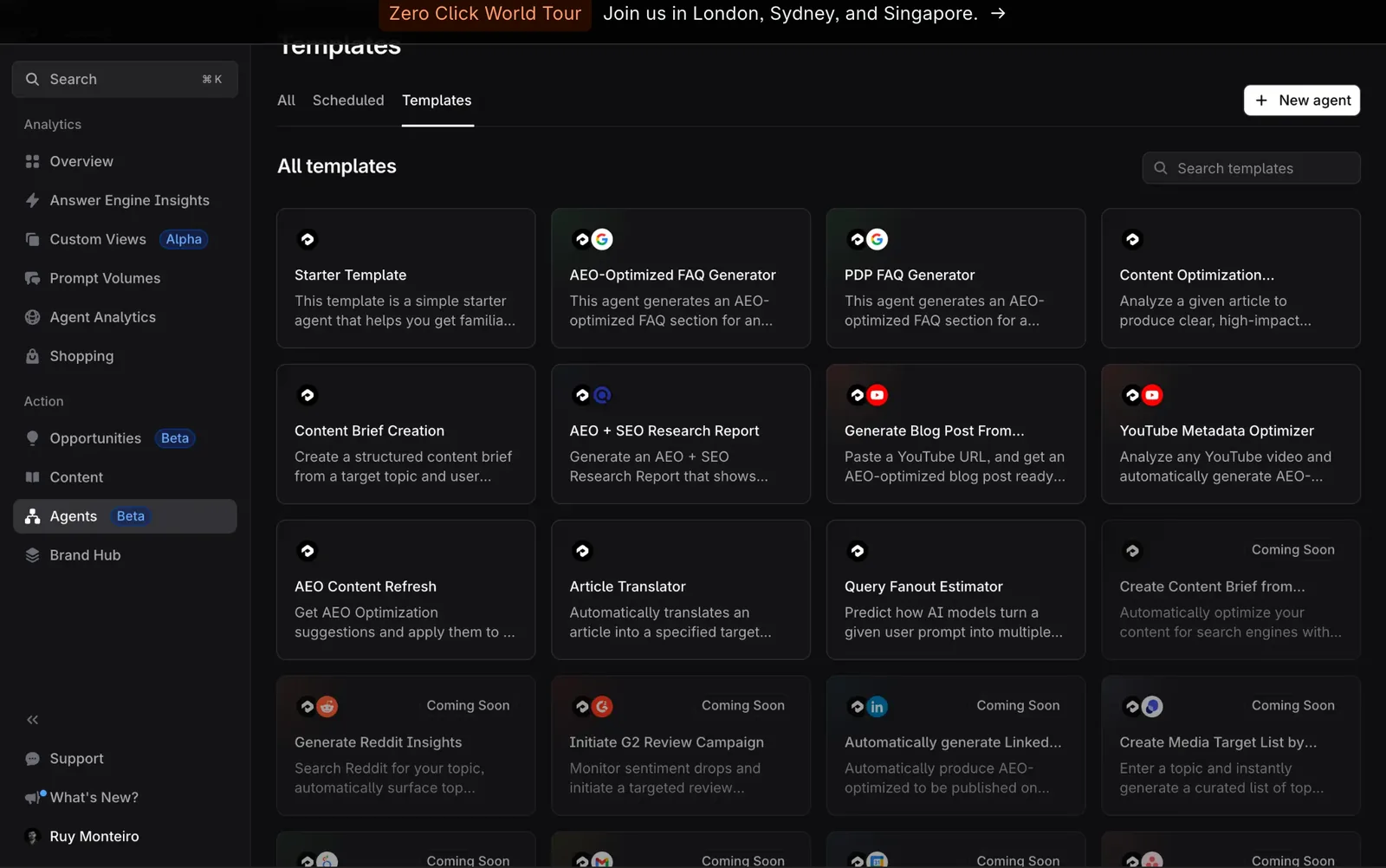
Because a page nobody checked is a risk, not a shortcut. Profound, one of the biggest AI visibility tools, says every agent run it makes “includes an approval step before anything publishes.”[2]That caution has a reason. Google's March 2026 update against low quality AI pages cut traffic by 50 to 80% on the sites it hit.[3] A tool that skips the check risks the same drop for its customer, not for itself.
Why does community mention resist automation?#
Because AI engines lean on actual people talking to each other, not on brand pages. Reddit is the largest single source Perplexity cites: estimates run from roughly a quarter to close to half of its sources.[4] No serious tool posts to Reddit on your behalf, and there is a reason for that too. When a group of researchers ran undisclosed AI accounts in a Reddit forum as an experiment, Reddit banned the accounts and its legal team called the study wrong.[5] A brand that tried to automate this would likely get banned, not cited.
Want the basics first? Read LLM SEO and what is AEO. To see whether the work pays off, read does GEO work.
This is the part Noetio builds by hand. We find the exact questions your buyers ask, write pages with sources an engine can check, and get your brand mentioned on the sites and forums each engine already trusts, then track every engine every week. See our AI SEO services and brand mentions service for how the checks and the writing work together.
Want to see what AI engines already say about your brand? Run the free check.
FAQ
- Can SEO be automated?
- Part of it. Tools can find buyer questions, spot gaps and draft pages. A person still needs to approve what goes live, and brand mentions on forums like Reddit cannot be safely automated.
- Can AI do SEO for you?
- AI can draft pages with sources, quotes and statistics, which scored 30 to 40% higher in one study. It cannot decide what is safe to publish or earn mentions on trusted sites for you.
- Is automated SEO content safe for Google?
- Not without a check. Google's March 2026 update against low quality AI pages cut traffic by 50 to 80% on the sites it hit.
- Can you automate Reddit mentions for AI search?
- No. Reddit is the largest single source Perplexity cites (estimates run from a quarter to close to half), but when researchers ran undisclosed AI accounts there, Reddit banned them. A brand that tried the same would risk a ban.
Sources
- Aggarwal et al., GEO: Generative Engine Optimization, KDD 2024. Sources, quotations, and statistics raised visibility by 30 to 40% across 10,000 buyer questions.
- Profound, Agents feature page. Every agent run includes an approval step before anything publishes.
- Digital Applied, analysis of Google's March 2026 scaled content abuse update. Reported traffic losses of 50 to 80% on penalized sites.
- Far & Wide, Reddit and Quora share of AI citations. Vendor adjacent analysis, directional.
- r/changemyview AI experiment and Reddit's response, April 2025.
Every source is the vendor's or researcher's own publication. Claims without a primary source were left out.
If you want this done for you